
Why Most Malaysia SMEs Still Struggle With Marketing (And What Modern Marketing Actually Looks Like)
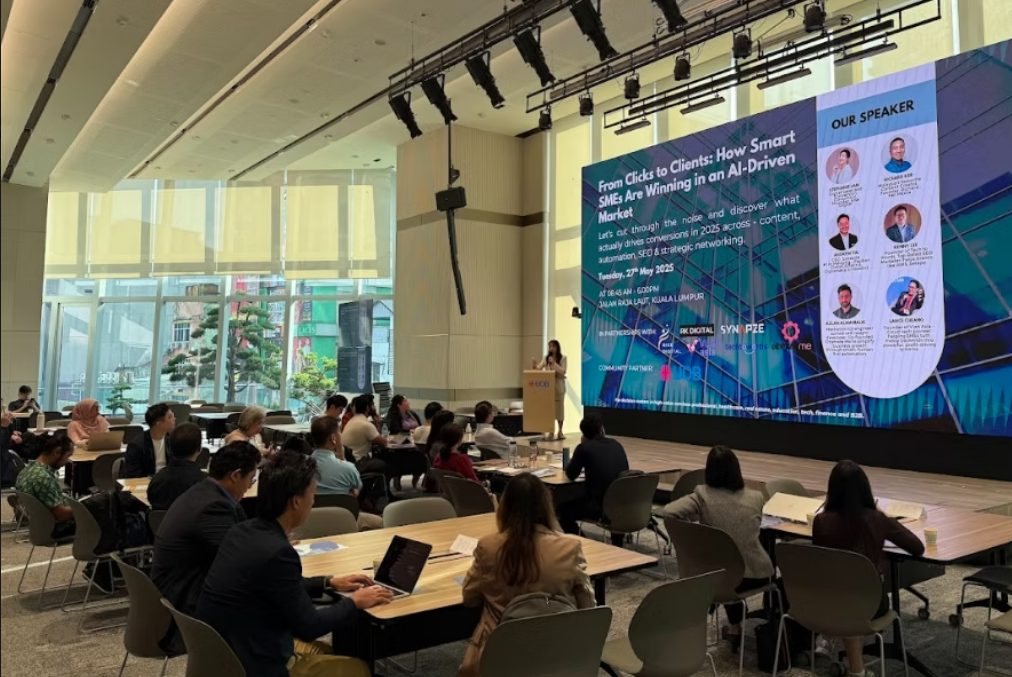
Over a decade and a half working with SMEs across Malaysia and Singapore, I have realised something interesting. The hardest thing to explain is not funnels, ads, or CRM systems. It is explaining what marketing actually is today.
Not because it is complex. Because many still carry an old mental model of marketing. To them, marketing means:
- posting on TikTok
- designing nice Canva graphics
- updating the logo
- posting “how-to” content on LinkedIn
- running a few boosted posts
And when sales are slow, they ask: “Why isn't marketing working?”
After working with hundreds of professionals and helping service businesses design their acquisition and conversion systems, I have noticed this pattern again and again: most companies are only doing Level 1 marketing. Visibility. Activity. Presence. But not growth.
And there is a huge difference between looking active and actually generating revenue.
The misunderstanding that's costing SMEs money
In many SMEs here, marketing is still treated like a junior function. Something an intern can manage. Something “creative”. Something tactical. Post more. Design nicer. Be more consistent.
But revenue does not come from activity. Revenue comes from systems.
You can post every day and still make zero sales. Because posting is not a strategy. It is just motion.
What changed my perspective
Interestingly, this challenge almost disappears when I work with more mature companies. The ones doing 7, 8 and 9 figures. The ones with structured teams. The ones who have already gone through a few growth stages.
With them, I do not need to explain what marketing is supposed to do. Their language is different. They do not ask “how many followers did we gain?” They ask:
- What's our cost per lead?
- What's our conversion rate?
- What's our pipeline value?
- How do we improve lead quality?
- Where is the drop-off happening in the funnel?
They see marketing as a revenue engine. Not a design department. That shift alone changes everything.
The toxic cycle I keep seeing locally
Here is the pattern that frustrates me the most. Marketing and sales operate separately.
Marketing focuses on awareness, content, visuals, campaigns. Sales focuses on closing — and at worst, closing is left to admin.
When results are poor, what happens? Sales gets blamed. “Conversion low.” “Team attitude problem.” “Not hungry enough.” Sometimes the whole sales team gets replaced. (True story, by the way.)
But almost nobody questions:
- Are we attracting the right audience?
- Is our offer clear?
- Are leads warmed up properly?
- Do we have follow-up systems?
- Is there nurture?
- Are expectations set correctly before the call?
- Do we have separate strategies for cold, warm and hot traffic — or are they all treated the same? Because different traffic wants to be communicated to differently.
If marketing brings in weak or unqualified leads, even the best salesperson will struggle. You cannot close what was never qualified properly.
So it becomes a toxic loop: bad targeting → weak leads → low conversion → blame sales → repeat.
This is not a people problem. It is a leadership and systemic problem.
Not all marketing is the same
Many leaders lump everything under one word: “marketing”. But marketing is not one thing. It is several different functions, and each one has a different job.
When you expect one junior marketer — or worse, your graphic designer or video guy — to do all of them, everything breaks.
From what I have seen working with high-growth service and high-ticket businesses, there are four core functions.
1. Brand — builds trust
Your positioning, credibility, website, testimonials, authority. Without this, people do not trust you. But branding alone rarely creates immediate revenue.
2. Performance — creates demand
Ads, offers, hooks, landing pages, testing angles. This is what generates leads consistently. Without this, you do not have pipeline.
3. Funnels and CRM — converts opportunities
Follow-ups, WhatsApp and email nurture, appointment flows, automation, SOPs. This is where most revenue is won or lost. Without this, leads leak away quietly. This is also the most overlooked function I see locally.
4. Sales — closes deals
Consultative conversations, objections, proposals, relationship building. Without this, nothing converts.
Here is the simple truth: ads generate leads, follow-up converts revenue. Most companies only do the first part. Some eagerly automate the crucial parts and watch them fail miserably. Improvise and systemise before you automate.
Why branding alone isn't enough for service businesses
If you sell into clinics, real estate, education, B2B services or high-ticket packages, your customers do not impulse buy. They need trust, clarity, explanation, nurturing, reassurance and multiple touchpoints.
So a “post more content” strategy will almost never work by itself. Service businesses do not grow because they look good. They grow because they design better systems.
My personal takeaway after years in the field
When the funnel and follow-up are fixed, revenue improves — double, triple, quadruple, no joke — even without increasing ad spend.
You cannot increase the size of a leaky bucket.
Same traffic. Same budget. Better system. Better results.
Which tells me this: most businesses do not have a traffic problem. They have a system problem.
What modern marketing leadership really looks like
Modern marketing is not more posts, more nice graphics that get the likes, more “awareness”.
It is clear positioning, strong offers, consistent demand generation, structured follow-up, sales alignment, and full ownership of revenue.
It is not creative work. It is not writing work. It is operational work. It is not a junior task. It is leadership.
TL;DR
Brand builds trust. Performance creates demand. Systems convert revenue. You need all three. Not just one. And definitely not just Canva posts.
Modern marketing is about designing a revenue engine, not just staying visible.
If you are leading a service or high-ticket business and feel like marketing is expensive but not effective, it might not be your people. It might be your structure. And sometimes, fixing structure changes everything.
If this reflects challenges you are currently navigating, I offer a complimentary conversion and revenue system audit to help founders and business leaders understand where misalignment may be limiting results. It is a diagnostic conversation to assess fit and clarity, not a sales pitch.